
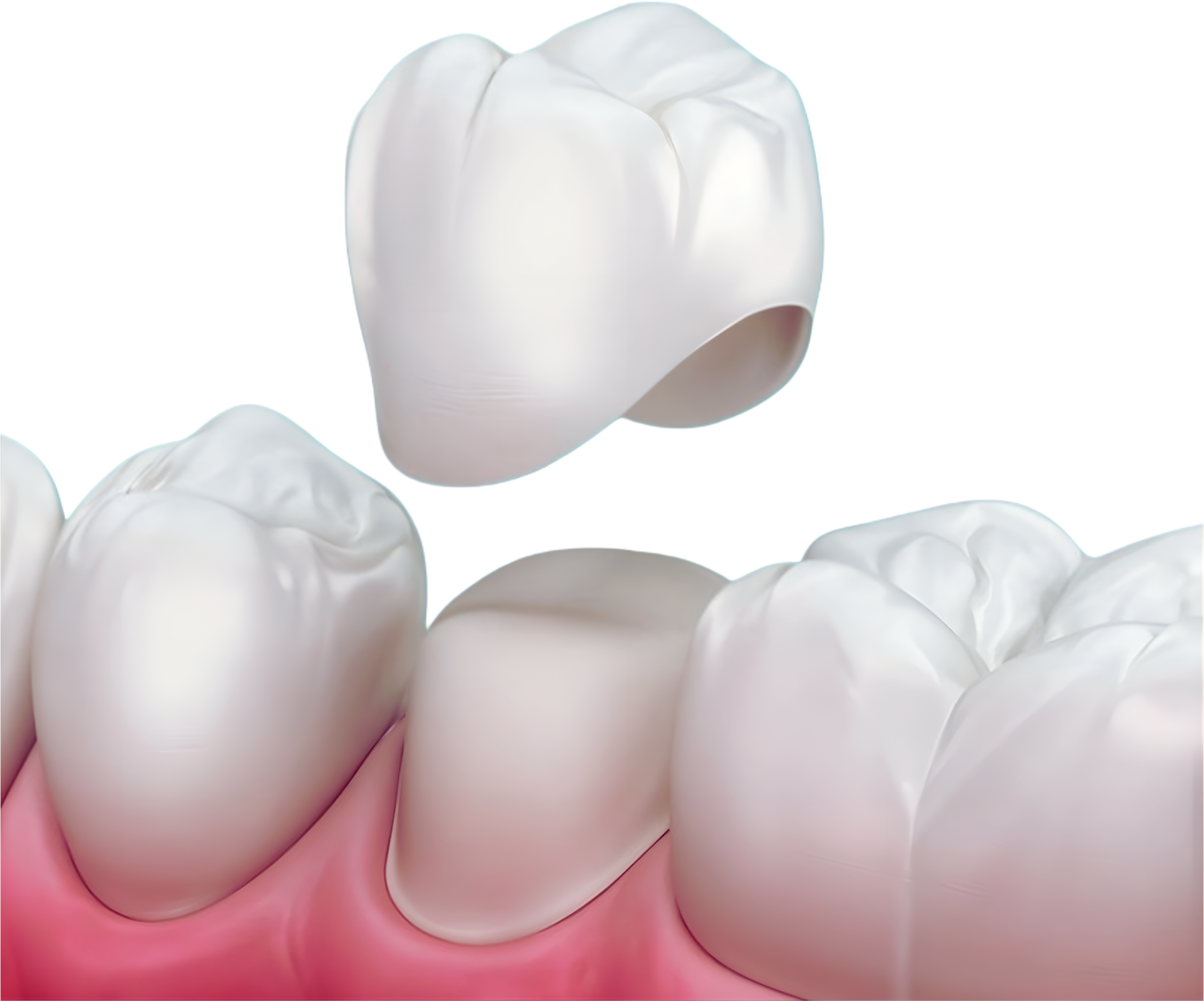
A dental crown (often called a “cap”) is a custom restoration that covers and protects a tooth. At Diamond Dental Arts, crowns are used to strengthen weakened teeth, restore comfortable chewing, and improve the look of your smile when needed.
Call or text: (941) 637-0101
We recommend a crown when a tooth needs stronger protection than a filling can provide. If a tooth has lost a large amount of structure from decay, fracture, or wear, a crown covers the tooth and helps keep it stable under chewing pressure.
Crowns are also a smart choice when a tooth has a very large filling (often half or more of the tooth), because the remaining natural tooth can be more likely to crack over time. By covering the tooth, a crown helps distribute biting forces more evenly and reduces the risk of future breakage.
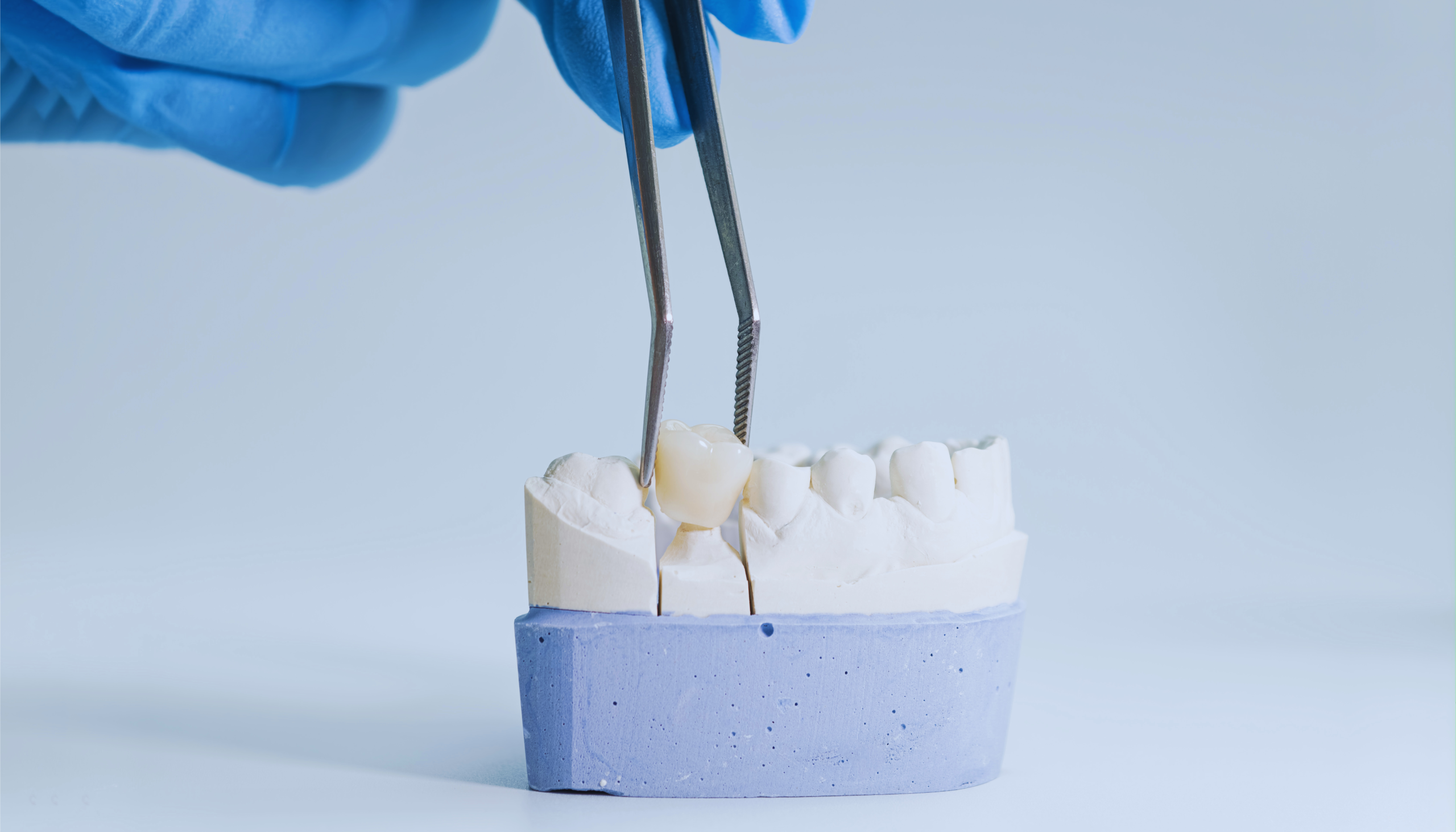
A crown acts like a protective shell over the visible part of the tooth above the gum line. It restores shape, strength, and function—so you can bite and chew comfortably again. It can also improve the appearance of a tooth that is discolored, misshapen, worn down, or uneven.
Crowns are often used to protect cracked teeth, rebuild heavily decayed teeth, support teeth with large fillings, restore worn teeth, or improve smile aesthetics when a more complete transformation is needed.
Yes. Front tooth crowns can look very natural when the shade, shape, and translucency are designed to match your smile. Material selection and careful planning are important, especially in the front of the mouth where small details matter. Our goal is always a result that blends in—not something that looks obvious or bulky.
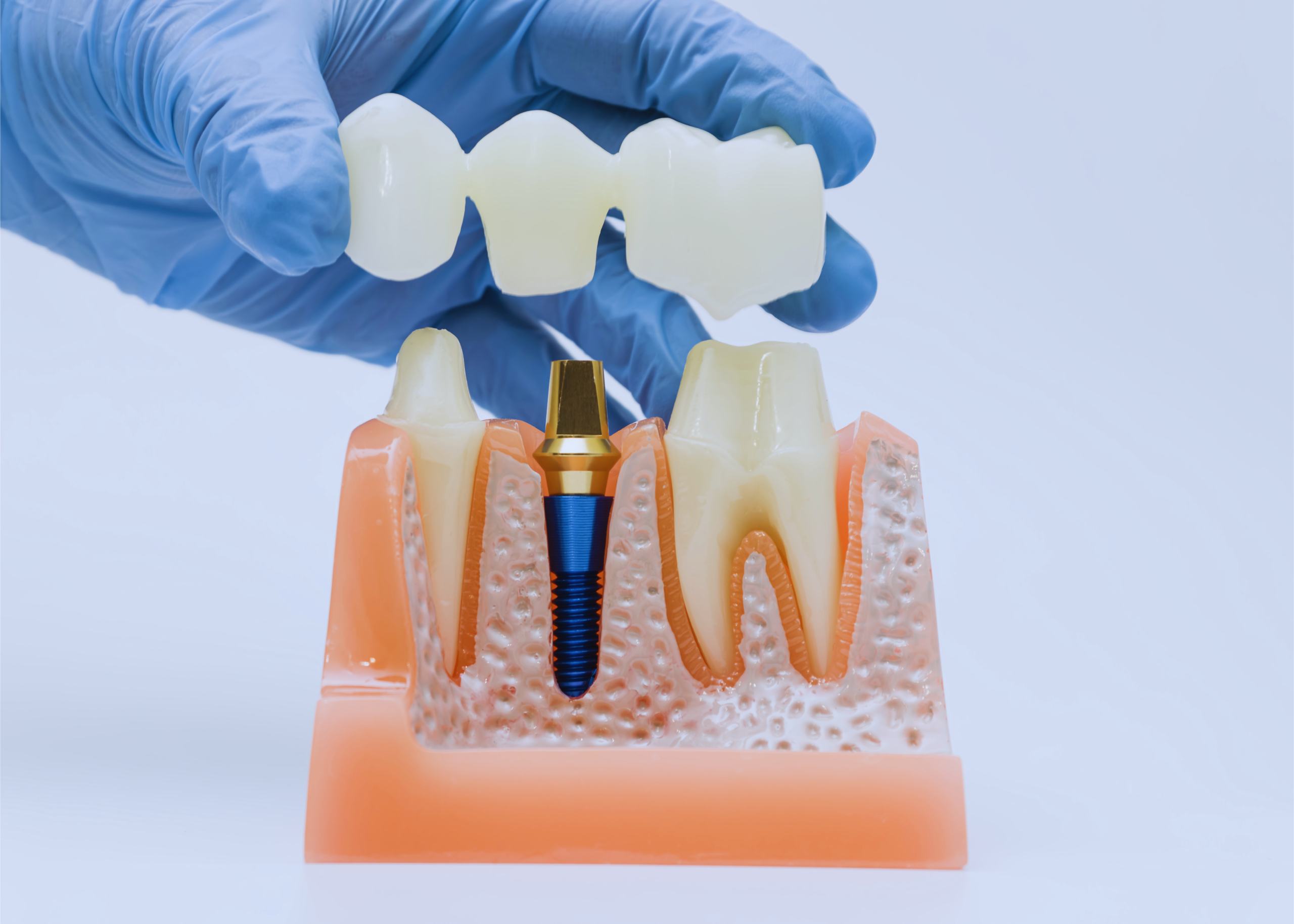
In many cases, a crown is recommended after a root canal. Once the inside of the tooth has been treated, the tooth can become more fragile—especially when a lot of structure was removed due to decay. A crown reinforces the tooth from the outside to help prevent fractures and protect the work that saved the tooth.
Skipping the crown after a root canal can increase the chance of the tooth cracking later. If a root canal tooth fractures deeply, it may not be repairable. Covering it on time is often the best way to preserve it for the long term.
Children can receive crowns when needed, but the type of crown depends on age, the tooth involved, and how long that tooth is expected to remain. In some cases—especially for back baby teeth—stainless steel crowns are commonly used because they are durable and practical. For visible front teeth, more natural-looking options may be considered.
The crown process should be comfortable. We use local anesthesia to numb the tooth and surrounding gum tissue so you don’t feel pain during treatment. If you ever feel sensitivity during the appointment, tell us right away—we can adjust anesthesia to keep you comfortable.
After the visit, mild soreness or temporary sensitivity is possible, especially if the tooth was already irritated. Most patients return to normal quickly.
Crowns can last for many years—and in some cases, decades—when they’re cared for properly. The crown material is strong, but the health of the tooth and gum around the crown matters most. The edge where the crown meets the tooth must stay clean to prevent decay underneath.
Brush twice daily, floss every day (especially around the crown margins), and keep up with professional cleanings and exams. If you clench or grind, a night guard can help protect both crowns and natural teeth from excess pressure.
Pain under a crown can happen for different reasons. If the crown is new and it feels sore when you bite, you may simply need a bite adjustment so the tooth isn’t hitting too high. That often resolves discomfort quickly.
If you have lingering, throbbing pain—especially pain that keeps you up at night—it may indicate the nerve inside the tooth is inflamed. In those cases, a root canal may be recommended even after the crown is placed. The good news is that root canal treatment can often be completed through the crown, followed by a small filling at the access point.
Most people can’t tell at home whether a tooth needs a filling, a crown, or something else—and that’s normal. The best step is an exam so we can evaluate the tooth, review images, and show you exactly what we see. We’ll explain your options clearly and recommend the most conservative treatment that protects your long-term oral health.
Questions or ready to schedule, call (941) 637-0101